



Clinical framework for implementing the treatment

Electrochemotherapy for cutaneous, subcutaneous and mucosal tumors

Led by Dr. Felipe Maglietti, GEM is a regional reference in therapeutic electroporation and a pioneer of electrochemotherapy in Latin America. It combines clinical experience, applied research and medical training to international standards.

Medical team specialized in electrochemotherapy
Fundamentals

Procedure basics

Electrochemotherapy combines an antineoplastic agent (bleomycin or cisplatin) with a pulsed electric field that causes reversible electroporation of cell membranes.

This transient permeabilization multiplies the intracellular drug concentration and enhances cytotoxicity locally.

International reference
Updated Standard Operating Procedures for Electrochemotherapy of Cutaneous Tumours and Skin Metastases (ESOPE 2018). DOI: 10.1080/0284186X.2018.1454602

Biomedical principles

  • Cell permeabilization is a universal phenomenon, independent of histology.
  • Although all exposed cells undergo DNA cleavage, only replicating cells die, mainly by apoptosis.
  • Wide margins can be treated without significant damage to healthy tissue.
  • Highly favorable safety profile, with a low complication rate and demonstrated clinical reproducibility.
  • Standardized technique following the international ESOPE 2018 guidelines.
According to European guidelines*

Indications

  • Skin metastases of any histology with bleeding, ulceration, discharge, odor or pain.
  • Progressing skin metastases expected to develop those symptoms.
  • Primary skin cancer, including recurrent tumors where other treatments have failed or cannot be used.
  • Patients on systemic therapy whose skin metastases respond poorly despite a good response in internal organs.
  • Patients who prefer electrochemotherapy to other therapeutic alternatives.

*ESOPE 2018. DOI: 10.1080/0284186X.2018.1454602

Electrochemotherapy applied to a skin lesion

It is also especially useful for:

Head and neck tumors, including eyelid, lips, ears and palate.

Tumor debulking before surgery or extending insufficient surgical margins.

Proven synergy with immunotherapy, as it alters the inhibitory tumor microenvironment and improves the systemic response.

Situations requiring functional or cosmetic preservation.

GEM experience

Clinical cases

Cases treated by our team, with histology and follow-up. The images are sensitive and are shown only on request.

  • Sensitive image
    Sensitive image Clinical photograph of a skin lesion before and after treatment.
    Squamous cell carcinoma

    Scalp

    Before and after

    Complete response 7 months after a single treatment session.

  • Sensitive image
    Sensitive image Clinical photograph of a skin lesion before and after treatment.
    Basal cell carcinoma

    Ear

    Before and after

    Complete response 3 months after a single treatment session.

  • Sensitive image
    Sensitive image Clinical photograph of a skin lesion before and after treatment.
    Keloids

    Ear

    Before and after

    Two treatment sessions, with complete response 3 months after the second. The ear defects are scars from previous surgeries.

How we work

GEM service models

Treating physicians

Patient referral

For physicians who want to refer a case and stay actively involved in the treatment strategy.

GEM provides:

  • Clinical assessment and feasibility of electrochemotherapy
  • Procedure performed to ESOPE parameters
  • Shared follow-up
  • Detailed technical report for the medical record
Refer a patient
Hospitals and clinics

In-house implementation

For institutions that want to offer electrochemotherapy within their own facilities.

GEM offers:

  • Clinical and technical training for medical teams
  • Initial training and regular updates in line with international standards
  • Installation and setup of the medical electroporator
  • Standardized protocols
  • Clinical, scientific and administrative support
Implement it at my center
Insurers and health plans

Coverage integration

For payers who want to add coverage with clinical and legal backing.

GEM supports:

  • Design of coverage criteria
  • Medico-legal documentation
  • Clinical case presentation
  • Protocols to include the treatment among covered services
Request a commercial proposal
Equipment and supplies

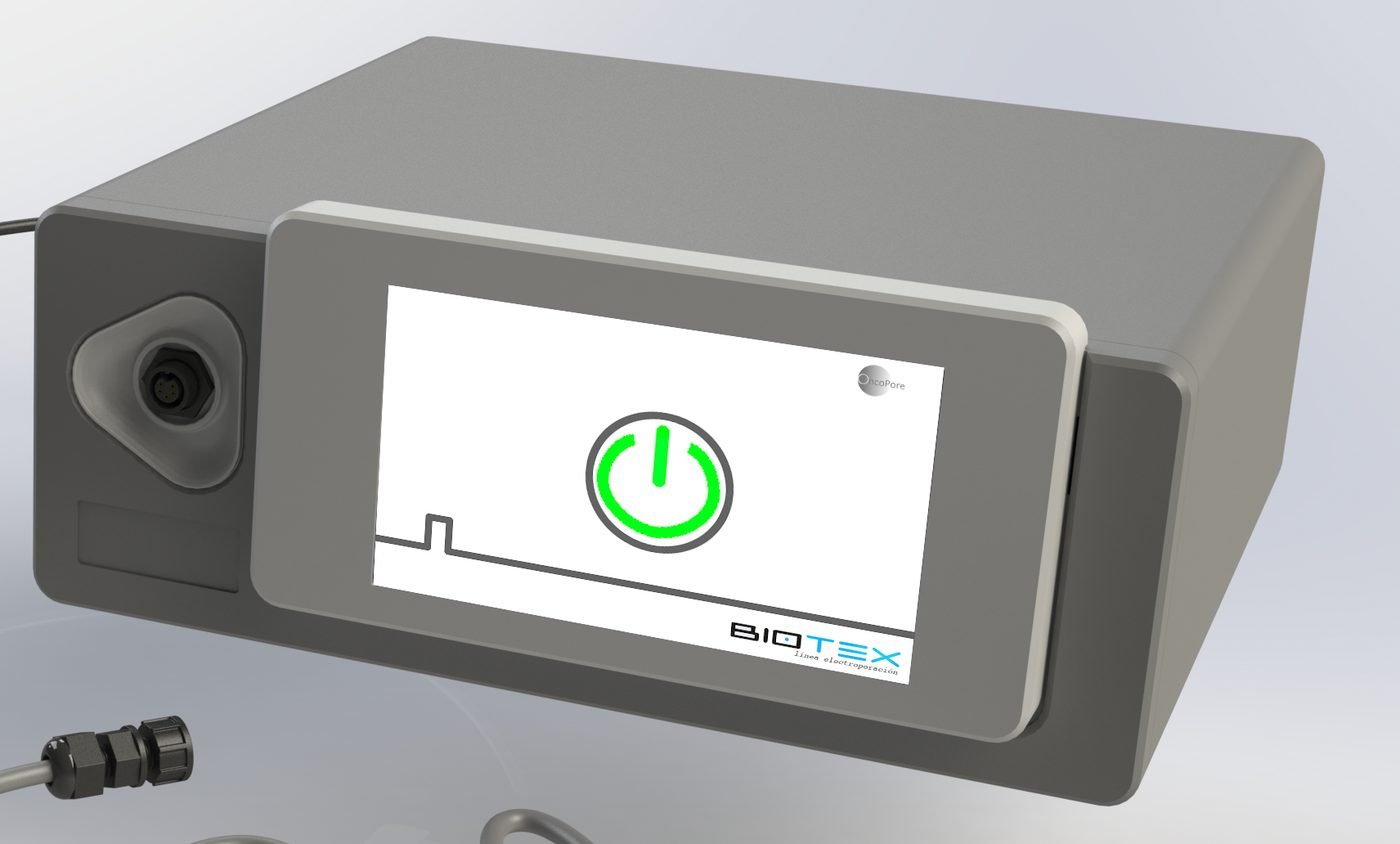
OncoPore®, medical electroporator

OncoPore® is, to date, the only certified medical-grade electroporator available in Latin America, designed specifically for electroporation-based applications. Its design and operation follow the technical requirements of the European ESOPE 2018 guidelines, ensuring reproducible procedures across different care settings.

Technical features

  • Current ANMAT certification for use in medical procedures.
  • Highly reproducible electrical parameters, with automated, controlled pulse delivery.
  • Interchangeable electrodes for superficial, subcutaneous and deep tumors and anatomically complex areas.
  • Precise electric field distribution, optimized to maximize cell permeabilization without harming healthy tissue.
  • Validated electrical safety, suitable for use alongside other medical devices.

Institutional benefits

  • Positions the institution with a cutting-edge treatment to European standards.
  • Reliable equipment with support and extended warranty.
  • Records relevant data for post-procedure reports.
  • Can be installed in operating rooms of different complexity levels.
OncoPore medical electroporator, developed by Biotex
ANMAT, Administración Nacional de Medicamentos, Alimentos y Tecnología MédicaDevice with current ANMAT certification
Coverage

Insurers, health plans and coverage

We work with Argentina's main private insurers, social health plans and insurance companies, providing full support for efficient, technically sound authorizations.

Payers with a coverage record

  • OSDE
  • IOMA
  • OS COR
  • AMEBPBA
Ask about other options

Regulatory backing and medical review

Electrochemotherapy has scientific backing and legal precedents in Argentina and abroad.

We provide the documentation needed for medical review, including its excellent cost-benefit profile for the institution.

Coverage support

  1. Patient presentation according to internationally accepted indication criteria.
  2. Technical-medical documentation aligned with review standards.
  3. Evidence-based therapeutic justification (ESOPE 2018).
  4. Reports and medico-legal arguments.
  5. Authorization management.
  6. Legal follow-up when needed.
Professional training

Go deeper into electrochemotherapy

Webinar

Fundamentals of Electrochemotherapy

Dr. Felipe Maglietti presents the principles of electroporation, the mechanism of action, the main clinical indications and the basics of the procedure.

#BarcelóLive · Fundación H. A. Barceló and CONICET

Watch on YouTube

Certified course by Fundación H. A. Barceló

  • Online, 1 month
  • 4 self-paced theory modules
  • 4 live online practical sessions
  • Endorsed by Instituto Universitario Fundación Barceló and the International Society for Electroporation-Based Technologies and Treatments (ISEBTT)

For dermatologists, oncologists, surgeons, geriatricians and multidisciplinary teams. Taught in Spanish.

Enroll in the course

Research and development

GEM leads research in therapeutic electroporation aimed at optimizing the treatment and expanding its clinical uses:

  • Gene electrotransfer
  • Combination with immunotherapy
  • Advanced electrical parameters
  • New electrode development
  • Expanding the indications of the technique
Collaborate on research

Scientific resources and literature

A selection of resources for clinical practice, research and medical education:

  • Indications and clinical uses
  • International guidelines (ESOPE 2018)
  • Treatment fundamentals
  • Clinical applications and cases
  • Evidence on combination with immunotherapy
  • Audiovisual and bibliographic material
Request access to the document center

Do you have a patient to refer or want to implement the technique?

Write to us and we will get in touch to arrange the assessment, implementation or training.

Frequently asked questions

For physicians

How do I select a candidate patient?

Mainly by the location and extent of the lesion. It is ideal for cutaneous or subcutaneous lesions with pain, bleeding or local progression, and for primary tumors where surgery would carry high morbidity or other therapies have failed. Cardiac function, comorbidities and concurrent systemic treatments are assessed; the treatment is usually very well tolerated.

Why is bleomycin used to treat tumors of any histology?

Electroporation is a physical phenomenon that permeabilizes cells regardless of histology. Bleomycin crosses the cell membrane poorly and does not enter cells significantly unless they are exposed to the electric field. It therefore concentrates in cells of the treated area and not in the rest of the body, so no relevant systemic side effects occur at the dose used. Once inside the cell, bleomycin moves to the nucleus and cleaves DNA, killing any cell that attempts to divide.

What response rate can be expected?

According to ESOPE and global clinical series, the objective response rate ranges from 60% to 100%, depending on histology, tumor size and the patient's immune status. Basal cell and squamous cell carcinomas usually respond in 80 to 90% of cases. Sarcomas or melanomas may respond less, depending on the patient's general condition.

What type of anesthesia is used, and who gives it?

It depends on the size, location and depth of the lesion. In most cases the procedure is done under sedation (neuroleptanalgesia), similar to a colonoscopy. If the lesion requires it, general anesthesia can be used; for small lesions in cooperative patients, local or regional anesthesia. The anesthesiologist decides the right approach for each patient.

Is it done in an operating room, and is the patient admitted?

It is done in an operating room but on an outpatient basis: the patient goes home within two hours and does not need admission.

What local side effects should be expected?

Mild transient pain, erythema, edema and superficial crusts. Major adverse events are uncommon and adjacent healthy tissue is not compromised, so recovery is usually very good.

Can patients with pacemakers, on anticoagulants or immunosuppressed be treated?

Patients with pacemakers can be treated, with caution for lesions over or very close to the device pocket.

For patients on anticoagulant or antiplatelet therapy, stopping medication about three days before is recommended to minimize bleeding risk.

Immunosuppressed patients can be treated; although response rates may be lower or more sessions may be needed, repeated treatment improves response and promotes training of innate immunity.

Is it compatible with immunotherapy or radiotherapy?

Yes. It can be used as neoadjuvant, adjuvant or concurrent treatment. It is synergistic with immunotherapy because it reduces local tumor burden, promotes antigen presentation and alters the suppressive tumor microenvironment. Repeated sessions may train both adaptive and innate immune responses, even in immunosuppressed patients.

For hospitals, clinics and insurers

What infrastructure does implementation require?

An operating room, a stable power supply and trained staff. The GEM team supports the launch.

How does it fit into the hospital's care pathway?

It is added as a low-complexity outpatient procedure, without admission, compatible with regular surgical scheduling.

What does the surgical team need to perform the technique?

The treating physician must be trained in the technique and in basic operating room practice (both are covered in the electrochemotherapy course), and an anesthesiologist must be present.

How are insurer authorizations handled?

GEM supports the whole process: clinical presentation, reports, medico-legal arguments and appeals when needed.

Will offering this therapy increase my institution's costs?

No. Electrochemotherapy is highly cost-effective: it helps reduce costs in complex patients and sets the institution apart from centers that do not offer the therapy.